Why Live-Streamers Have Replaced Critics as the Internet's Most Trusted Reviewers
Someone buys a $1,800 phone because a stranger unboxed it live at 2am and 40,000 people watched it happen in real time. That's not a hypothetical. It's Tuesday night on Twitch. The old model, where a magazine or a blog tested something for a week and published a verdict, is losing ground fast to people who just show their screen and let you watch.
Think about how you last decided whether something was worth your money. Did you read a review, or did you watch someone use the thing for twenty minutes and judge for yourself? For a huge and growing number of people, especially anyone under 35, the answer is the second one. And the reasons behind that shift go deeper than short attention spans.
The Trust Problem With Written Reviews
Written reviews have a structural weakness that never used to matter much: you have to take the writer's word for it. A reviewer says the battery lasted 14 hours. Did it? You weren't there. A blog claims a claw machine game pays out fairly. Based on what, exactly?
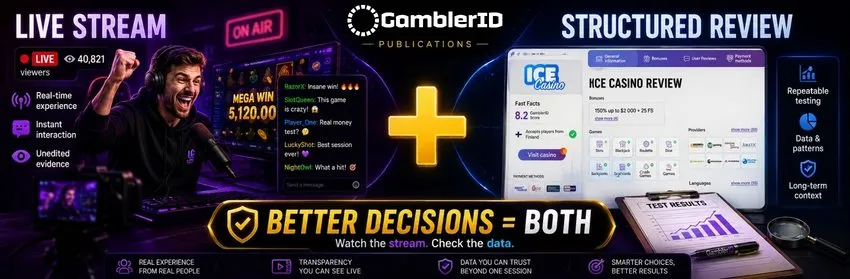
Live streaming solves that by removing the gap between claim and evidence. The viewer sees the actual session, unedited, in real time. Chat can ask questions mid-stream. If something goes wrong, it goes wrong on camera, not in a footnote buried in paragraph nine.
Research backs this up more than most people assume. A study on live streamer parasocial relationships compared audiences in South Korea and the United States and found that real-time interaction, not just content quality, is what drives viewers to trust a streamer over a traditional outlet. It's not that streamers are smarter or more accurate. It's that watching someone live feels like being in the room.
That trust transfers directly into buying and platform decisions. If a streamer takes ten minutes to get their withdrawal approved on some new platform, viewers see the wait. They see the confusion, the support chat, the actual outcome. No editing, no spin.
Where the Skepticism Still Belongs
Here's the catch nobody in the streaming world likes to admit. A single live session, however honest, is still one data point. The streamer might be sponsored. The platform might have handed them a boosted account. Maybe the stream ran for forty minutes and things looked smooth, but nobody's watching what happens on session two hundred, when the volatility evens out or the support queue gets slow.
This is exactly the gap that structured testing was built to fill, and it matters most in spaces where a single lucky run tells you almost nothing. Poker is the clearest case. A streamer can run hot for three hours and make a middling platform look incredible. Viewers who want to cross-check that impression against repeatable, methodical testing increasingly turn to sites built for exactly that, and PokerTube Reviews are one of the places serious players go when they want a second opinion that isn't riding on one good night.
Gambling involves risk. Play responsibly and only wager what you can afford to lose, and if it stops feeling fun, talk to someone about it.
That doesn't make the streamer irrelevant. It means the smartest viewers use both. Watch the stream for the vibe, the interface, the personality. Check the structured review for the numbers that don't change depending on luck.
The Scale Nobody Saw Coming
It's easy to treat this as a niche shift, but the numbers say otherwise. Twitch alone has consistently out-hoursed every rival platform combined for years, and industry tracking of live-streaming viewership shows just how lopsided that gap has become as YouTube Live, Facebook Gaming, and smaller players fight for scraps of the remaining audience.
That scale changes incentives. When a platform knows ten thousand people might watch a single session unfold, it can't afford the kind of shortcuts that used to slide past a written review nobody fact-checked. Slow withdrawals get noticed instantly. Rigged-feeling mechanics get called out in chat before the session ends. The audience becomes the fact-checker, in real time, whether the platform likes it or not.
There's an economic layer too. A Peer-Reviewed Look at Monetization on Twitch found that streaming has built an entirely new influencer economy, one where creators are financially tied to the platforms they cover. That's worth sitting with. The same intimacy that builds trust also creates a conflict of interest a written reviewer, in theory, doesn't have. Neither format is clean. Both need a skeptical eye.
What This Means for How You Should Actually Decide
If you're choosing where to spend money, time, or attention based on what you see online, don't pick one format and call it done. Watch the stream. Read the deep dive. Compare notes. The streamer shows you the experience. The structured review, done right, shows you the pattern behind a hundred experiences instead of one.
I'll say the unpopular thing: most people over-trust the streamer and under-trust the boring spreadsheet-style review, and that's backwards more often than not. A charismatic host with good lighting is not the same thing as a repeatable result. The best decisions come from triangulating both, not picking a favorite format and sticking with it out of habit.
For more on how review formats and platform trust keep shifting across the industry, GamblerID's own Gambling Publications track these changes as they happen, alongside deeper looks at How Casino Games Actually Work once you get past the marketing.