Inside this PG Soft interview
Ken Zhang, Managing Director of PG Soft, sat down with GamblerID to talk about the Malta studio behind Mahjong Ways, Mahjong Ways 2 and Fortune Tiger. He explains what building for the phone first really means, why a game rooted in one culture can travel across borders and where PG Soft draws the line on AI. He also covers what lab testing does and doesn't prove, and why telling genuine PG Soft games from imitations matters more as the brand grows. Readers who want the numbers behind the studio will find them in our PG Soft Review.
Ken Zhang on leading PG Soft
What's your role at PG Soft, and how did you end up working there? What pulled you toward this specific studio?
I'm the Managing Director of PG Soft, responsible for the company's overall strategy, business performance and day-to-day operations. I work closely with our leadership team to guide product development, build and support our teams, strengthen key partnerships and drive international growth, while ensuring that quality, regulatory compliance and responsible business practices remain central to our decisions.
What appeals to me about PG Soft is the opportunity to bring a stronger creative identity to mobile casino games. A game should be recognisable through its visual language, its sound and the way it plays. That gives a studio something meaningful to build over time.
For me, the most interesting challenge is bringing creative ambition and a sustainable business together: giving talented people room to develop original ideas, while delivering games that operators can integrate confidently and adult players can understand and enjoy. That combination is what makes this work rewarding.
Building for the phone first
PG Soft launched in 2015 with a mobile-first design philosophy, at a time when most of the industry was still adapting desktop games for mobile rather than building natively for it. What made you confident that bet would pay off, and how has that founding principle shaped the way PG Soft builds games today?
The opportunity was to design around how people actually use a phone. A small touchscreen changes the entire experience: how you hold the device, where your thumb rests, how quickly you can read a symbol and how clearly a feature explains itself. Those decisions deserve attention from the first sketch.
That is what mobile-first means to me. It sets the priorities for the interface, animation, sound and technical performance. A beautiful game still has to load efficiently and remain legible on a smaller screen.
Today, the principle is just as relevant. Devices have become more capable, but good design still requires discipline. The question is whether every element earns its place and makes the experience clearer and more distinctive.
What's a mechanic or design direction PG Soft has been especially focused on in 2026, and what's driving that focus?
The design direction I would highlight for 2026 is a closer relationship between theme and mechanics, with particular attention to how clearly a feature unfolds on mobile. A transformation or multiplier can be much more memorable when its behaviour makes sense within the world of the game.
The challenge is to add depth while keeping the experience readable. Players should be able to follow what has happened, understand the rules and see the result without having to decode an overcrowded screen. Animation and sound have a practical role in communicating those changes.
What drives that direction is the desire to give each title a stronger identity. In a crowded catalogue, a well-executed central idea can make a game easier to remember than a long list of loosely connected features.
Mahjong Ways and games that travel
Mahjong Ways became a genuine phenomenon in markets like the Philippines and across Asia, in a way few slot titles ever do. Looking back, what do you think made that specific game connect so strongly with players, and did the team see that kind of reception coming?
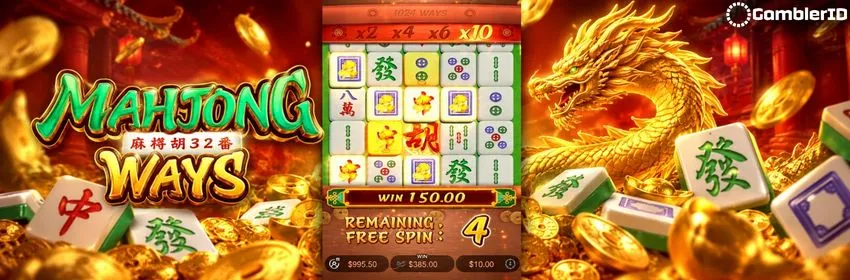
I think Mahjong Ways connected because it brought together a familiar cultural theme and a recognisable game identity. Mahjong tiles have a distinctive visual language and, for many people, a strong association with social occasions and shared memories. That gives the theme a resonance that a generic set of symbols would struggle to achieve.
The mechanics give that identity substance. Wild transformations and increasing multipliers in the free spins feature create a clear sense of progression, while the presentation keeps the tiles central to the experience. Familiarity with mahjong helps players recognise the theme; it does not affect the outcome of a chance-based slot.
As for anticipating the reception, I would be cautious about claiming that anyone could predict success on that scale. My reading of its appeal is that the theme and the gameplay reinforce one another exceptionally well.
Do you have a personal favorite among PG Soft's slots, and what is it about that title specifically that keeps it your favorite?
I would choose Mahjong Ways. What stands out to me is how clearly the game knows what it wants to be. The tiles give it an immediate identity, and the presentation and features support that identity throughout the experience.
I also like what it demonstrates about cultural inspiration. A theme can be specific and still communicate across borders. It does not need to lose its character to reach a wider audience.
From a design perspective, that is a useful standard to return to: can someone recognise the game, understand its central idea and see why the different elements belong together? Mahjong Ways makes a compelling case for the value of that coherence.
PG Soft's games resonate across very different markets: Asia, Latin America, Europe. Beyond translation and localization, how much does a title actually get reshaped for a specific region versus built once for a global audience?
I would start with the idea behind the game. Some themes have a particular cultural home; others travel more naturally. A strong regional inspiration can still connect internationally if the game communicates its identity clearly. Mahjong Ways is a useful example of that potential.
The balance I favour is a distinctive core concept with thoughtful adaptation around it. Language is one part of that, alongside cultural references, the clarity of instructions, device performance and the requirements of each regulated market. Any change affecting rules or game mathematics also needs the appropriate compliance review.
I would be wary of assuming that everyone in a region wants the same experience. Local knowledge should help a team ask better questions and avoid cultural mistakes. It should also leave room for a game to find an audience beyond the market that first inspired it.
Keeping one identity across 200 games
PG Soft now has a large team across design, art and development, and close to 200 titles in its catalog. How do you keep a consistent creative identity and quality bar as both the studio and the portfolio keep growing?
For me, consistency starts with a shared understanding of what makes a game worth releasing. Each title should have a clear central idea, a coherent visual identity and an experience that works comfortably on mobile. Those principles can hold across a large portfolio while leaving plenty of room for individual teams to experiment.
The important conversations are between disciplines. Art, mathematics, animation, audio and engineering all influence how a game feels. Reviewing those elements together helps reveal when an attractive idea is difficult to understand, or when a good mechanic needs a clearer presentation.
As a studio grows, I believe its standards need to become easier to explain and apply. The ambition should be that a player can recognise the care behind a PG Soft game even when its theme is completely different from the previous release.
AI, testing and trust
AI keeps coming up across the industry as both an opportunity and a risk for game studios. Where does PG Soft actually use it in development today, and where do you think it has no business being involved?
My view is that AI is useful where its output can be checked and where it gives people more time for judgement and craft. Potential applications include exploring early concepts, assisting with documentation or helping prepare tests. Those are examples of possible uses, rather than a claim that every one is part of our current workflow.
The boundaries matter. Creative direction, rights clearance, security decisions and release accountability should remain with people.
Any use touching game logic or mathematics must remain subject to controlled development, human validation and the applicable independent testing.
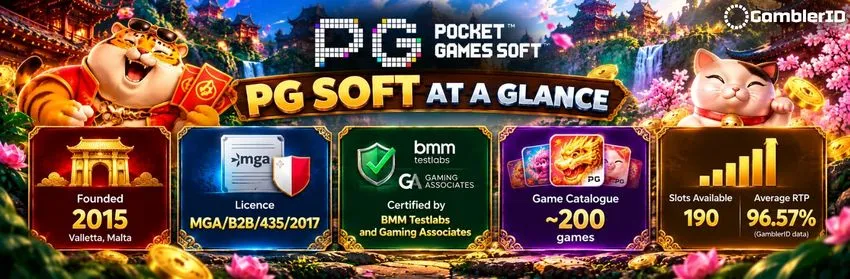
PG Soft holds an MGA license, with certification from both BMM Testlabs and Gaming Associates. What does that dual-certification process actually involve, and why run games through two separate testing labs rather than one?
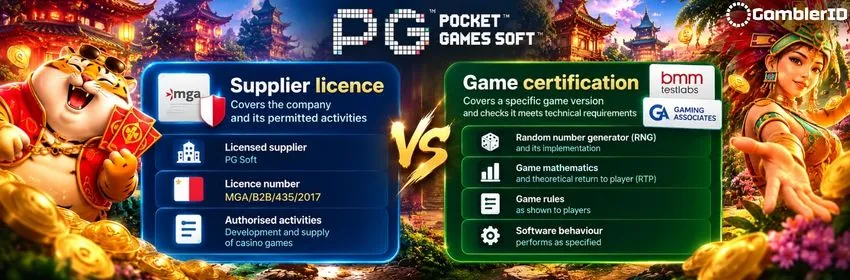
I would separate the licensing of a supplier from the certification of a particular product. They address different questions. A supplier licence concerns the authorised business and its permitted activities; a game test report covers a defined product version against specified technical requirements.
PG Soft publicly identifies both BMM Testlabs and Gaming Associates as certification partners. In general, testing examines the random number generator and its implementation, the game mathematics and theoretical return to player, the rules shown to players, and whether the software behaves as specified. The precise scope depends on the product and the target jurisdiction.
Working with more than one laboratory can provide access to different regulatory approvals and testing expertise. It should not be taken to mean that every game undergoes an identical process twice in every market. The meaningful assurance is a traceable test scope and evidence that the released version meets the applicable requirements.
What comes next
Where do you want PG Soft to be a few years from now that it isn't today?
I would like PG Soft to be recognised even more consistently for the quality and originality of its games across regulated markets. Commercial growth matters, but I would also judge progress by whether we are creating new titles with an identity as memorable as our best-known games.
That means continuing to invest in people and giving teams the conditions to develop strong ideas. It also means being a dependable partner: clear documentation, reliable delivery and the ability to support operators as their requirements evolve.
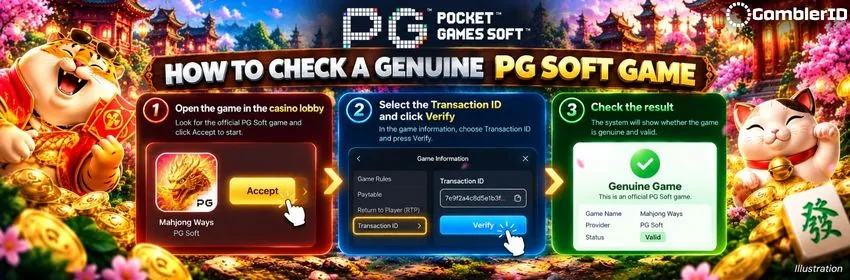
Trust is another part of that ambition. As the brand grows, helping partners and players distinguish genuine PG Soft products from imitations becomes increasingly important. A few years from now, I would like the company to have a broader international presence and an even stronger reputation for creative quality and product integrity.
How PG Soft's games hold up on RTP, volatility and max win is covered in our PG Soft review, and the wider list of Slot Providers puts the studio next to its rivals.